Your shopping cart is currently empty.
| Subtotal | €0,00 |
| Shipping costs | including VAT, excl. Shipping costs |
| Total | €0,00 |
|---|

17.04.2026
Table of Contents
- Why are tree diseases and pests increasing?
- What types of tree damage are there?
- How can you recognize sick or weakened trees?
- What role does drought stress play?
- How can we protect trees?
- Especially important: Watering trees correctly
- Common tree diseases and pests
- Typical problems of various tree species
Trees are an important part of our environment: they provide shade, produce oxygen, filter pollutants from the air, and offer habitat for numerous animals and plants. At the same time, many trees are increasingly under stress. Long periods of drought, rising temperatures, compacted soils, and pests are taking a heavy toll on them.
Weakened trees are more susceptible to diseases, fungal infections, and insects. Especially in cities, many trees suffer under difficult conditions, as they often have little root space and water available.
Key facts at a glance
- Many tree diseases are caused by stress factors such as drought, heat, or compacted soils.
- Weakened trees are more susceptible to fungal diseases, bacteria, and pests.
- Particularly common problems include bark beetles, ash dieback, powdery mildew, or the horse chestnut leaf miner.
- Typical warning signs include wilted leaves, premature leaf drop, bare crowns, or cracks in the bark.
- Adequate water supply strengthens the vitality and resilience of trees.
- Mulching, loose soil and proper pruning can help prevent diseases.
- Especially urban trees and young trees often suffer from drought stress and require additional care.
- If damage is detected early, many trees can be preserved in the long term.
- In case of major damage or problems with road safety, experts should be consulted.
Why are tree diseases and pests increasing?
Many tree species are suffering more from environmental stress today than they did a few decades ago. Especially the Climate change This significantly changes the living conditions for our trees: Longer periods of heat, lack of rain and dry soils mean that many trees are suffering. Drought stress advised. At the same time, mild winters allow numerous pests to multiply and spread more quickly.
A healthy tree possesses natural defenses against diseases and insects. However, if it is subjected to prolonged stress, it loses vitality. This makes it easier for fungi, bacteria, and pests to infest it.
The following factors, in particular, weaken trees:
- Water scarcity and drought stress
- Compacted soils
- Heat and strong sunlight
- Injuries to the trunk or roots
- Air pollution and road salt
- Nutritional deficiency
- waterlogging
- Incorrect pruning techniques
Particularly city trees Commonly affected areas include asphalt surfaces, poorly permeable soils, and high temperatures, which further complicate water supply.
What types of tree damage are there?
Basically, a distinction is made between parasitic and non-parasitic damage.
Parasitic damage
These damages are caused by pathogens or pests. These include:
- mushrooms
- Bacteria
- virus
- Insects and larvae
- Mites
- small mammals
Non-parasitic damage
Non-parasitic damage is caused by environmental conditions or improper care. This includes:
- Drought
- Frost
- waterlogging
- soil compaction
- Nutritional deficiency
- salt
- Pollutants
- heat damage
Often both forms occur together: For example, a tree weakened by drought becomes significantly more susceptible to fungal diseases or pest infestation.
Why are tree diseases and pests increasing?
Many trees show early signs of stress or disease. If these symptoms are recognized in time, it's often possible to react and support the tree. Typical signs of weakened trees include:
- wilted or curled leaves
- premature leaf fall
- discolored leaves or needles
- bald patches in the crown
- dead branches
- Fungal infestation on the trunk
- Cracks in the bark
- resin or mucus discharge
- small or weak new shoots
- Holes in the trunk or under the bark
Not every symptom immediately indicates a serious illness. However, if several signs occur simultaneously, the tree should be observed more closely.
What role does drought stress play?
Drought stress Today, dehydration is one of the most significant causes of weakened trees. If water is lacking for an extended period, the tree can no longer adequately supply its leaves and branches. At the same time, its natural defenses diminish. This makes trees significantly more susceptible to:
- Bark beetle
- fungal diseases
- Bark damage
- Crown dieback
- premature leaf drop
Adequate and slow watering can help reduce drought stress and maintain the tree's vitality.
How can we protect trees?
Not every disease can be prevented. However, many problems can be reduced through good care and adequate hydration.
Important measures include:
- Watering trees correctly: Young trees, in particular, need regular watering during their first few years. Slow and thorough watering is important so that the water can seep deep into the root zone.
- Mulching: Mulch protects the soil from drying out and reduces evaporation. At the same time, a layer of mulch improves the soil structure in the long term.
-
How to fertilize trees correctly: Organic fertilizers or compost can help to supply the soil with nutrients in the long term and promote soil life.
-
Properly cutting trees: Damaged, dead, or diseased branches should be removed regularly. Proper pruning improves the crown structure and can help reduce fungal infections and other damage. Clean tools are essential to avoid further injuries and infections.
-
Lime wash to protect the bark: For some tree species, a lime wash can be beneficial. It protects the trunk from extreme temperature fluctuations in winter and can reduce frost cracks or sunburn on the bark. Young fruit trees, in particular, often benefit from a white protective coating.
- Avoid soil compaction: Compacted soils make water absorption difficult and hinder root growth. The area around the trunk should remain as loose and permeable to water as possible.
- Avoid damage: Injuries to the trunk and roots make it easier for pathogens to penetrate. Construction work or lawn trimmers, in particular, can cause damage.
- Regular monitoring: Those who regularly observe trees often detect diseases early and can react more quickly.
You can find more information in our article: Sick tree. Identify the causes and properly care for weakened trees. Or in the article Saving trees instead of cutting them down: The most important measures for weakened trees.
Especially important: Watering trees correctly
Adequate water supply is one of the most important measures for keeping trees healthy and resilient. Especially during prolonged periods of drought, many trees become stressed because they can no longer absorb enough water. This weakens their natural defenses and makes them more susceptible to diseases, fungal infections, and pests.
What's important is not just the amount of water, but also the method of watering. If water is poured too quickly or too superficially, it often doesn't reach the deeper root layers sufficiently. Some of it evaporates or runs off the surface before the soil can absorb the moisture.
Therefore, trees should be watered as slowly and thoroughly as possible. This allows the water to gradually seep deep into the root zone and supply the tree more sustainably.
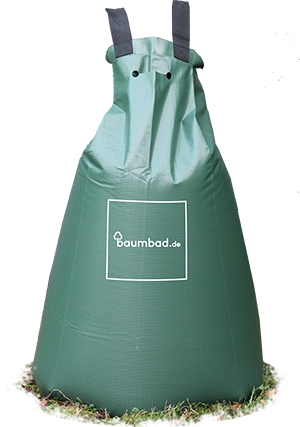
Tree watering bags These methods can help to release water slowly and in a controlled manner into the soil over several hours. This makes the water supply more even and can reduce drought stress.
Common tree diseases and pests
The bark beetle on spruce trees
The spruce is one of the most common tree species in German forests. Infestation by the bark beetle is particularly problematic. Healthy spruces can often defend themselves against individual beetles by producing resin. However, weakened trees are often no longer able to do so. The beetles lay their eggs under the bark. The hatching larvae destroy the tree's vital vascular system. This interrupts the water supply, and the tree often dies. Typical symptoms:
- Drill holes in the bark
- resin seepage
- brown needles
- peeling bark
- bare crowns
Drought further promotes infestation, as weakened spruce trees are less able to produce resin.
Ash dieback
Ash dieback is caused by the fungus Hymenoscyphus fraxineus and affects ash trees throughout Europe. The disease causes shoots and branches to die back. Young ash trees are particularly vulnerable. Typical symptoms:
- wilted leaves
- dead shoots
- dark discolorations on the bark
- Premature leaf drop
- bare crown areas
Severely damaged trees increasingly lose their stability.
The horse chestnut leaf miner on horse chestnut trees
The horse chestnut leaf miner primarily infests the leaves of the horse chestnut tree. The larvae eat the leaf tissue from the inside out. Typical symptoms:
- brown spots on the leaves
- premature discoloration
- Premature leaf drop
The tree usually doesn't die immediately as a result, but it is weakened in the long term. The important thing is:
- Remove infested leaves
- Dispose of leaves properly
- and provide the tree with sufficient water.
Bacterial horse chestnut blight
Besides the horse chestnut leaf miner, horse chestnuts frequently suffer from the so-called bacterial horse chestnut blight. This disease is caused by the bacterium Pseudomonas syringae pv. aesculi. Typical symptoms:
- dark mucus discharge from the trunk
- Cracks in the bark
- black discolorations
- dying parts of the crown
The disease significantly weakens the tree and facilitates additional fungal infestation.
The oak processionary moth
The oak processionary moth is a pest that primarily infests oak trees. Its caterpillars eat leaves, weakening the tree. The caterpillars' fine, stinging hairs are particularly problematic. They can cause skin irritation and allergic reactions in humans. Typical symptoms include:
- bald patches in the crown
- Web nests on the trunk
- Caterpillar clusters
Removal should only be carried out by qualified personnel.
Powdery mildew and other fungal diseases
Fungal diseases are particularly common in weakened or persistently damp trees. The most common fungal diseases include:
- Powdery mildew
- Rust fungi
- scab
- Leaf spot diseases
- Fruit tree canker
Typical symptoms:
- white coatings on leaves
- brown spots
- deformed leaves
- dead shoots
- rotting areas on the trunk or branches
Good ventilation of the crown and proper care can help prevent fungal diseases.
Typical problems of various tree species
| Tree species | Common diseases and pests |
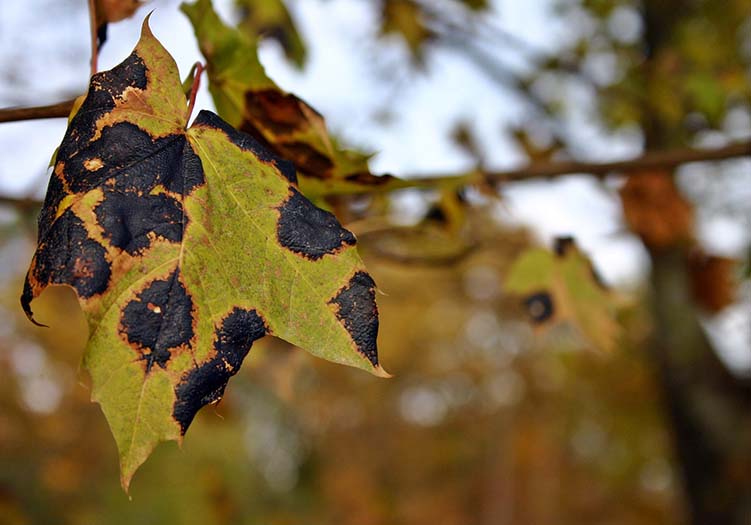
| maple | Sooty bark disease, Verticillium wilt, powdery mildew, leaf spot diseases |
| apple tree | Apple scab, powdery mildew, canker, collar rot, bitter pit |
| Araucaria | Needle browning, root rot, fungal infestation due to waterlogging |
| Pear tree | Pear rust, pear scab, fire blight, powdery mildew |
| Book | Beech bark necrosis, leaf spot diseases, powdery mildew, drought stress |
| yew | Phytophthora root rot, scale insects, mealybugs, fungal infestation due to waterlogging |
| Oak | Powdery mildew, oak processionary moth, oak jewel beetle, root rot |
| Esche | Ash dieback, ash bark beetle, root rot |
| Spruce | Bark beetles, red rot, honey fungus, pine needle blight |
| Hornbeam | Leaf spot diseases, powdery mildew, bark canker, drought stress |
| Kiefer | Pine needle cast, pine blister rust, Diplodia shoot blight, bark beetle |
| Cherry trees | Monilia blossom blight, shot-hole disease, cherry fruit fly, gummosis |
| larch | Larch canker, larch needle cast, rust fungi, bark beetles |
| Linde | Aphids, sooty mold, leaf spot diseases, drought stress |
| Peach and apricot trees | Crumble disease, monilia, scab, shot-hole disease, chlorosis |
| Plum trees, Mirabelle plums, Renekloden |
Sharka disease, rust, monilia, shot-hole disease, fool's disease or pocket disease |
| buckeye | Horse chestnut leaf miner, bacterial horse chestnut blight, leaf scorch |
| fir | Fir canker, needle blight, rust fungi, honey fungus, fir aphid |
| Trumpet Tree | Verticillium wilt, powdery mildew, leaf spot diseases |
| elm | Dutch elm disease, elm bark beetle, leaf spot diseases |
| juniper | Juniper rust, pear rust as an intermediate host, shoot dieback |
| Meadow | Willow rust, leaf spot diseases, powdery mildew, willow borer |
| Crabapple | Apple scab, powdery mildew, fire blight, fruit tree canker |
| Ornamental cherry | Monilia, shot-hole disease, leaf spot diseases, gummosis |
| cypress | Phytophthora root rot, cypress canker, shoot dieback |
Natural fertilization and activation of soil life
The power of the soil
Tips, knowledge and practical advice for strong trees
Discover more posts
Trees need nutrients to grow healthily. In many gardens or cities, these nutrients are lacking in the soil, for example, because leaves are removed or the soil is heavily used. Appropriate fertilization can help improve the soil and support tree growth. However, it's important not to fertilize simply "on a hunch," as some soils already contain sufficient nutrients.
Organic fertilizers like compost or worm castings work more slowly, but improve the soil in the long term and promote soil life. Mineral fertilizers work faster, but usually only provide individual nutrients. For many trees, organic fertilization is the more sustainable solution in the long run.
Yes, that can be very helpful. A soil sample can determine which nutrients are present in the soil and which are lacking. The pH value is also measured. This allows you to fertilize the tree precisely and avoid over-fertilizing. A simple soil analysis usually only costs around [price missing]. €20–40.
A nutrient deficiency can manifest itself, for example, through yellow or pale leaves, weak growth or few flowers show. However, similar symptoms can also be caused by drought or compacted soil These problems arise. Therefore, you should always check first whether the tree is getting enough water.
Yes, that's possible. Irrigation bags release water slowly into the soil. When liquid fertilizer is mixed with water, it reaches the root zone evenly. This way, a large portion of the soil around the tree comes into contact with the nutrient solution.
The best time to fertilize is usually in spring and early summerFertilizing is best when the tree is growing and producing new leaves. During this phase, the tree can absorb nutrients particularly well. Very late fertilization in autumn is usually not advisable.
The soil is home to many microorganisms, such as bacteria, fungi, and earthworms. They break down organic matter and make nutrients available to plants. Active soil life therefore helps trees absorb water and nutrients more effectively. Organic fertilizers can support this soil life.
Great idea, easy handling and everything from ordering to delivery.
Michael K.